
The best 360 Feedback conversations are those that build the awareness of the person receiving the feedback – and motivate them to change, grow and develop. Here’s a step-by-step tutorial on Coaching 360 Degree Feedback, and how to help your team love their feedback!
Coaching 360 Degree Feedback is something many team leaders or line managers are asked to do as part of their job. If you’re a line manager, team leader or simply someone who needs to have a feedback conversation with someone’s who’s just received 360 feedback, this training video is for you.
The video covers, in detail, the following items:
- How to read and understand the 360 feedback report
- Using coaching skills plus 360 data effectively in a conversation
- Feedback skills and how to deal with ‘difficult’ feedback
- Building a SMART development plan with 360 feedback
The text below is a summary of the video tutorial; please watch the video through for more details and examples.
Why is coaching through 360 Degree Feedback results necessary? Surely people team members can figure out their feedback for themselves?
People will have many reactions to their 360 report. They may understand the feedback and feel completely positive about it. They may not understand it fully. They may focus on negative rather than positive messages. They may ignore the feedback (‘I’ve seen this all before’), or they may reject it (for many reasons that seem rational but may not be). They may be happy, angry, upset or indifferent. And they may just put the whole thing away in a drawer (or a file on their laptop) and do nothing more with it.
That’s why it’s essential to have a debriefing 360 Degree Feedback meeting: a one-to-one discussion to help the person make sense of their feedback, and what to do with it.
How to read and understand the 360 feedback report
Read the report through, make sure you understand the results (the report provider will give you guidance) and ask yourself:
- What are the key consistent data coming from the feedback?
- What are the top 3 or 5 items that have an overall highest average rating, and overall lowest rating?
- How are the ratings backed up by the comments given?
- What are the key messages from the feedback?
But be careful! Don’t get fixed on your own views, and don’t go into the meeting in ‘telling’ mode. Instead go into the coaching meeting – in a coaching frame of mind!
Using coaching skills plus 360 data effectively in a conversation
A coaching frame of mind means:
- Asking questions rather than giving instructions
- Listening more than talking
- Giving the coachee time to reflect, consider and speak
The GROW coaching model is a great tool for conducting a debriefing or coaching of a 360 feedback.
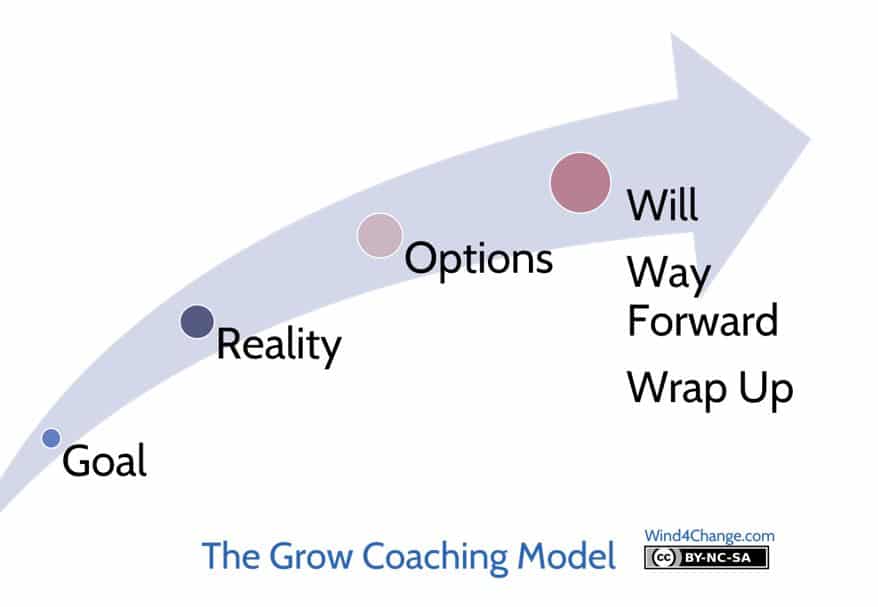
In this model, the 360 Feedback forms the basis for each stage of the discussion, but it’s particularly useful for identifying the Reality (i.e. what’s really happening) and the Obstacles/Options as these may also be identified from the feedback that the team member has received.
Good coaching questions
Here are some great questions for starting/conducting the feedback conversation. Don’t forget to listen to their answers!
- “I’m here to help you get to where you want“: It’s important to emphasise that this discussion is meant to be helpful and supportive.
- “Have you had time to read your report?” If no, then allow them 10 minutes to do so, or to revisit it again.
- “What thoughts or feelings did you have about the report?” It’s important that you give the coachee a chance to say what their initial thoughts and feelings are about the feedback they’ve received. Probe a bit more. “Was it what you expected?” “Were there any surprised?” “What do you think were the key messages?” “Do you agree?“
Doing this will also give you some clues about their current attitude to the feedback – is it positive, negative, mixed, confused….?
- “Before we look at the feedback, let’s take a minute to review your overall goals “(G in grow).
Then, when working through the detailed 360 report with the coachee, you can ask:
- What are the key messages in this feedback?
- Does the feedback fit with your perceptions and experiences?
- Where does the feedback differ, between you and colleagues, and also between colleagues? How/when might this have happened, or how does it happen?
- What feedback would you like to discuss or explore further?
- Which strengths or development areas are most relevant for your role?
There will be lots of positive feedback here, areas of strength, so don’t forget to talk about these too. Don’t just focus on the negative feedback – that’s what some coachees may be inclined to do.
Written feedback
The written feedback should be explored as part of the discussion, as it helps to give context to the ratings.
It’s a good idea to help the coachee to see positive comments and emphasise these.
Also, don’t let them fall into ‘who said this?’ as it won’t help them get the best from the feedback. Focus on the wider feedback and messages.
Dealing with ‘Difficult Feedback’
‘Difficult Feedback’ could be:
- Unexpected and critical feedback
- Unexpected low ratings
- Badly or rudely worded, or
- A criticism of the person, rather than the skills or behaviour
If someone gets difficult feedback, they may be shocked and in denial, they may be angry and they may try to withdraw from the conversation. As a coach, don’t be surprised at this type of reaction. Give them time to vent their feelings, review the positive feedback, possibly help them to reframe the negative feedback, and to explore it: Where (not who) has it come from? Does it fit with other feedback or is it a one-off? Is there anything they can learn from it. (Watch the video for more examples).
Building a SMART development plan with 360 feedback
Next step is the Obstacles/Options session of the GROW discussion. Use the notes and discussion points to talk about the messages of the feedback, based on the Goals.
You can use the 360 Feedback development plan as the ‘Way Forward’ or ‘Will’ stage of the GROW model. What are the strengths that have been identified and where can the coachee use them more? What about development points?
Help the coachee to create a SMART Development Plan with 2 or 3 key development points. Ask them how you can support them to achieve these Development points, and listen to their concerns and requests.
Following up
Set a date for a follow up discussion, maybe in a couple of months, even if you are working with the coachee every day. It’s important to give every day feedback, but also to set aside time for review and reflection.
By coaching 360 Degree Feedback using the skills and techniques I talk about in the video, you can make the conversation a positive and development-focused experience, for both you and your team. And they will love their feedback!
Related content
How to build a feedback culture
Leading organisations use 360 Feedback
Jo Ayoubi is a specialist in using 360 Degree Feedback for individual and team development.



azithromycin tablets
azithromycin tablets